|
|

|
The world's poorest
people pay the highest prices for water and in return they
often receive water contaminated by sewage. Haitians have
a per capita income of approximately $300 and they spend an
average of 12% of that to get water.
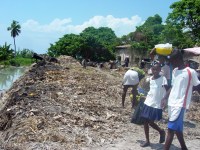
Seen here the water cart. |
| About 75% of Haiti's population
live in abject poverty. Infant mortality is over 10%. The non-potable
water becomes a breeding ground for typhoid and cholera -- diseases
to which children are particularly susceptible. Access to safe
water must be seen as a basic human right and a key factor in
the fight against disease. |
|
In 2004 only 54% of the population used improved
drinking water sources. 30% of population used adequate sanitation
facilities this was reduced to 14% in rural Haiti.
United Caribbean Trust (UCT) as part of our Imagine
me... school child awareness program seeks to partner with Clean
Water for Haiti (CWH)
 |
All across Barbados,
every month, on
'Child Awareness Day' the
children of the Secondary Schools will be encouraged to bring
a bottle of cold water to school instead of purchasing a bottle
of soda. This will be a sign of solidarity with the children
around the world that often times do not even have water to
drink! |
The US $1 saved will be collected
and donated to the UCT's Child Sponsorship Program established within
the country being featured that month. UCT is committed to investing
US $30 to purchase a Biosand filter from CWH
for every family within our Child
Sponsorship Program within Haiti .
Complying with two of the Millennium
Development Goals -
- Reduce by two thirds the
mortality rate among children under five
- Reduce by half the proportion of people without
sustainable access to safe drinking water
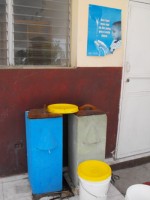
BioSand
Water Filters are an adaptation of slow-sand filtration, designed
for use at the household level. The filter removes water-borne bacteria,
viruses, protozoa, and other organisms that cause diseases such
as cholera, typhoid fever, and amoebic dysentery. The filter also
strains out the particles and organic matter that cause cloudiness,
unpleasant taste, colour, and odour.
UCT Founder will, God willing, be
traveling to Haiti in December to look at the feasibility of establishing
this project into Jacmel and extending this project into Honduras
and even as far afield as Africa.
Permission requested to use information from www.cleanwaterforhaiti.org
 |
Clean
Water for Haiti (CWH) is a volunteer run, faith
based missions and humanitarian aide organization started in
2001. As a registered non-profit organization in Canada and
the US, CWH works to provide sustainable solutions to the water
crisis in Haiti. |
|
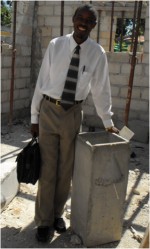
Through Biosand
filter projects CWH is able to provide a simple, effective
and affordable solution to the lack of clean water sources
for Haitian families. The household slow sand Biosand filter
is a simple design that uses basic readily available materials,
allows for easy production, and they are easy to transport. |
There are no
moving parts, they do not require electricity and can be used
by even the youngest members of the family. With minimal maintenance
a Biosand filter can work effectively for over 20 years and
can be manufactured, delivered and installed for about $30
US. |
|
| CWH staff and trained Community
Stewards (volunteers within a community) provide essential education
and support to filter recipients and their communities. By educating
people in proper filter use, sanitation and hygiene we are able
to give them resources, not only for clean water, but also so
they can take proactive steps to prevent the spread of disease
which gives them control over their own health. |
|
UCT is researching the possibility of introducing a
Sanitation and Hygiene promotion side by side with the introduction
of the Bio Sand Filter Project. While the benefits of improved drinking
water supply are evident, it is also true that the effects on health
are multiplied several times if combined with improved sanitation
and especially hygiene promotion. |
|
 |