United Caribbean
KIMI Suriname
Antiochie Paranam
Mission Suriname
Mission Trip 2009
|
|
home >>suriname>>afobaka
dam
Suriname
-Afobaka dam
 |
Sourced from wikipedia.org
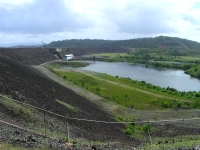
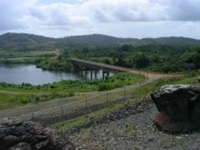
The Afobaka dam with a surface area of approximately
1,560 km² (602 mi²), depending on the current water
level, it is one of the largest reservoirs in the world.
|
| The reservoir was created by constructing
a dam across the Suriname River between 1961 and 1964. The dam
spanning the river is 54 m (177 ft) tall, and is built near
the small town of Brokopondo. Contrary to the reservoir's long
official name, it was quickly rechristened Brokopondomeer by
Dutch-speaking locals. The length of the dam, including secondary
dams along the margins of the reservoir, is 12 km (7.5 mi).
The watershed which feeds the reservoir is 12,200 km² (4,710
mi²) in area. |
|
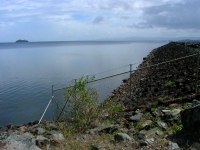
The reservoir was put into service in 1965, but
did not reach its optimal water level until 1971. Due to the great
area of the reservoir, villages home to approximately 5,000 people
had to be abandoned.
 |
The largest of the these,
the village of Ganzee, had approximately 2,000 residents.
Most displaced residents simply founded new villages (Dutch:
transmigratiedorpen) downstream from the dam, in many cases
with the same names as the previously abandoned hamlets. A
separate government operation, "Operation Gwamba,"
was conducted to save animals from the soon-to-be lake bed.
|
| The dam was constructed in order to provide electricity
to plants involved in the processing of bauxite into alumina,
and later into purer aluminum metal. These plants were operated
by Suralco, the Suriname Aluminum Company, which is a daughter
company of Alcoa. About 75% of the dam's electricity was used
to power these plants, and the portion of the electricity produced
by the dam was used to power Suriname's capital city, Paramaribo. |
 |
|
|